“Phoebe”
Specifications
- About 26,000 plain Markdown files in one Obsidian vault.
- Twenty-five small apps, written by AI agents from conversation.
- 1,146 changes logged since December 2025.
- 696 development cards, most written from a phone.
- Runs on a Mac mini in the house. No data on anyone else’s servers.
- Reached by text, email, voice or a tap.
- Named for Phoebe of Romans 16, “a helper of many.”
- Edition of one household.
Called Select until November 2026.
A personal operating system, built inside an Obsidian vault, operated by AI agents.
Phoebe is not a product. It’s one person’s working life — tasks, calendar, people, media, finances, goals, communications — run through a single Markdown vault of some 26,000 files, with twenty-five custom plugins as the interface and AI agents as the engineering team, the operations staff, and the librarian.
There’s no code here. It’s a demonstration: screenshots, recordings, architecture notes, and the real, dated history of how the system was built. The short version of that history is the reason this showcase exists — the application layer, the server runtime, the agent workflow, and most of the subsystems below were built in about three weeks of evenings, through conversation.
What it does today
Every one of these is a live surface used daily, not a demo:
| Subsystem | What it does |
|---|---|
| Phoebe Home | Native homepage led all day by Morning Home — the morning brief with one-tap verbs that write real records — plus the app dock, a capture line that understands “did X on Thursday”, and a daily verse |
| Phoebe Tasks + Board | Task app over plain Markdown checkboxes; a kanban with a Phoebe Lane — drag a card there and an agent drafts the work within five minutes |
| Media Log | Always-on capture pipeline: share a link from a phone or a browser tab, a server ingests it into a 3,200+ item library rebuilt to be watched — a lean-back Theater, a phone swipe feed, random Mixes — with full-text post capture and AI tag suggestions from a closed vocabulary |
| Phoebe Media | What to watch and hear: a poster-gallery watchlist, a watched log, streaming subscriptions, and a Tonight deal of three titles you can actually play right now |
| Phoebe Learn | Every subject being studied becomes a class — one readable note holding syllabus, notebook, timeline, and the media captured for it, fed from every channel — with Field guides (reference works that shelve themselves) and a one-tap Teach me on any saved video |
| Comms | Phoebe has her own email address and her own iMessage line — one chat spine that picks up a text in two or three seconds and counts a message delivered only when the bridge confirms it, with a daily delivery self-test, group threads, a bounded access tier for household members, a triaged mail gateway, and free-form conversation as the default door |
| Phoebe Routing | One channel-agnostic parse-and-route brain behind every channel: the same words do the same thing texted, spoken, typed, or emailed — deterministic doors, a schema-bound intent parser, receipts that only confirm writes that happened, and mis-routes pinned as regression fixtures |
| AI Router | Every AI call in the ecosystem priced, attributed, and budget-capped — model steering per surface, spend at a glance, a governor with a hard stop |
| Calendar + People | Read-only family calendar layer; a CRM that harvests @mentions from notes instead of demanding data entry |
| Voice | Spoken morning brief; “Hey Siri, Ask Phoebe” from a phone over a secured tunnel; dictated thinking sessions that file themselves |
| Finances | A living balance sheet from raw exports: every account, penny-reconciled stock lots, an honest index benchmark, net worth charted over time |
| Phoebe Property | Everything is an asset: every house system, vehicle, and tool leads with what it consumes, carries its manuals and photos, and hears finished upkeep from tasks, texts, payments, and papers — plus a portal for the land itself, with historical aerials, survey lines, and its ownership history |
| Family history | A family tree in one standard file with an audit trail on every change, a migration map, and evidence rules strict enough that a link is “proven” only when an original record has been read |
| Intentions | Consent-based goal review — every goal gets a periodic verdict, so silent abandonment is structurally impossible — plus the weekly household meeting, run live |
| Dev Dashboard | The dev cycle itself as a kanban: agent recommendations land as cards, ships require evidence, review is a click-through room |
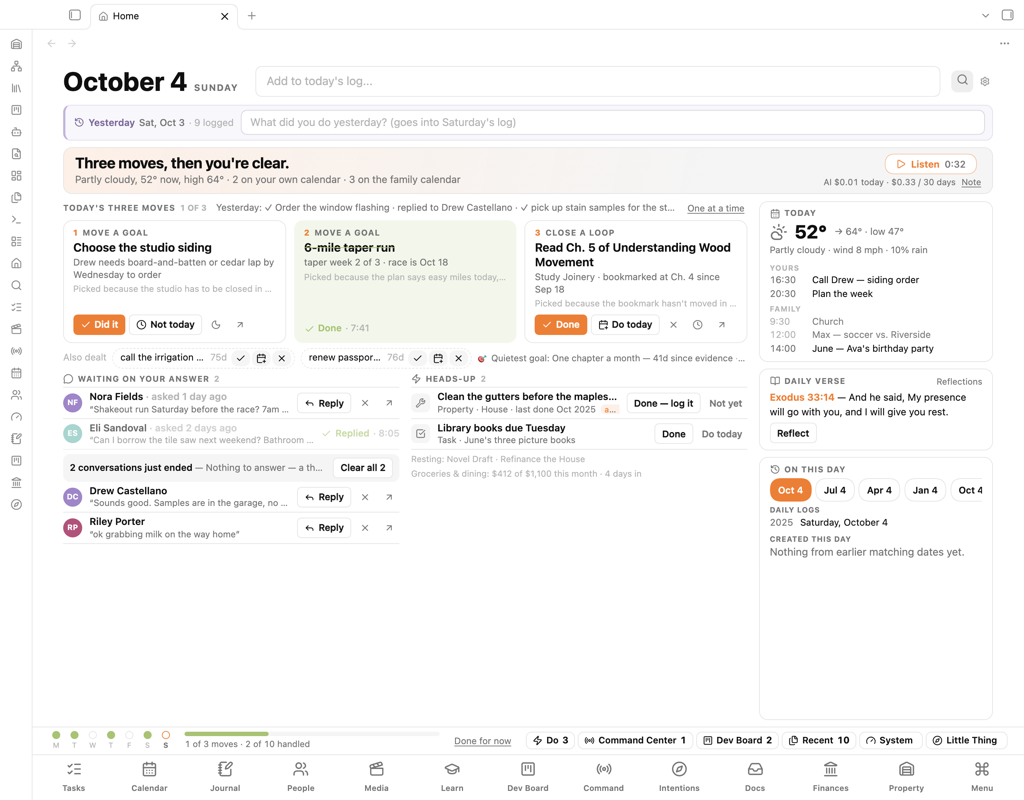 Home |
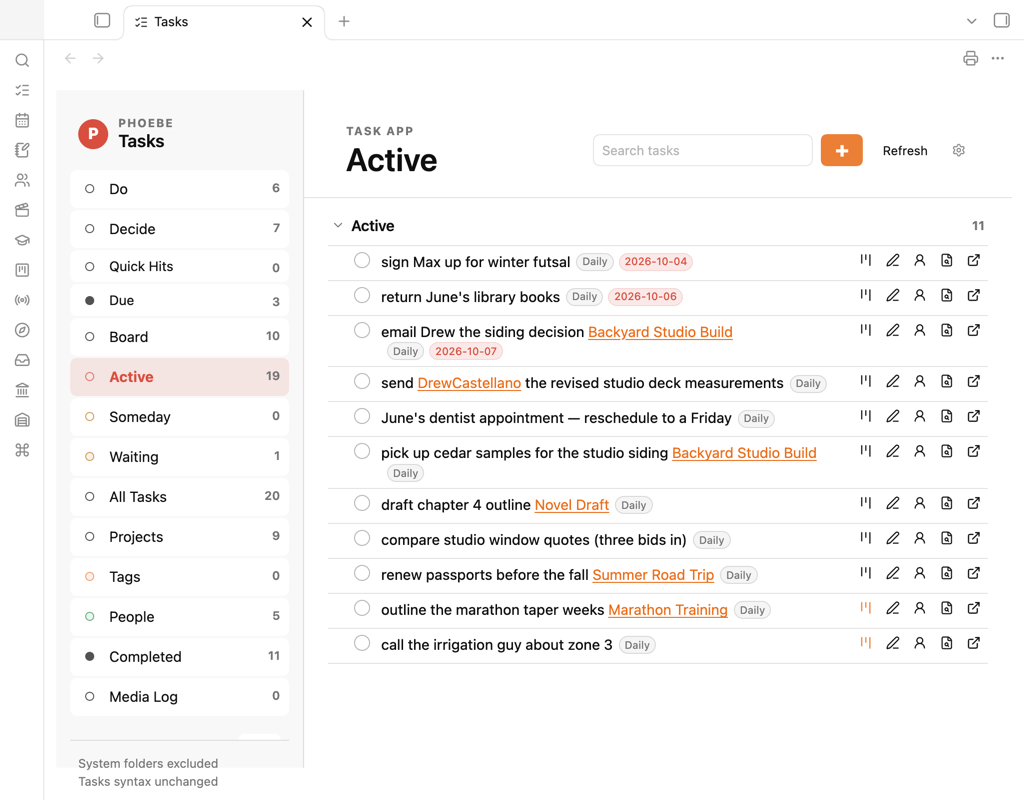 Tasks + Board |
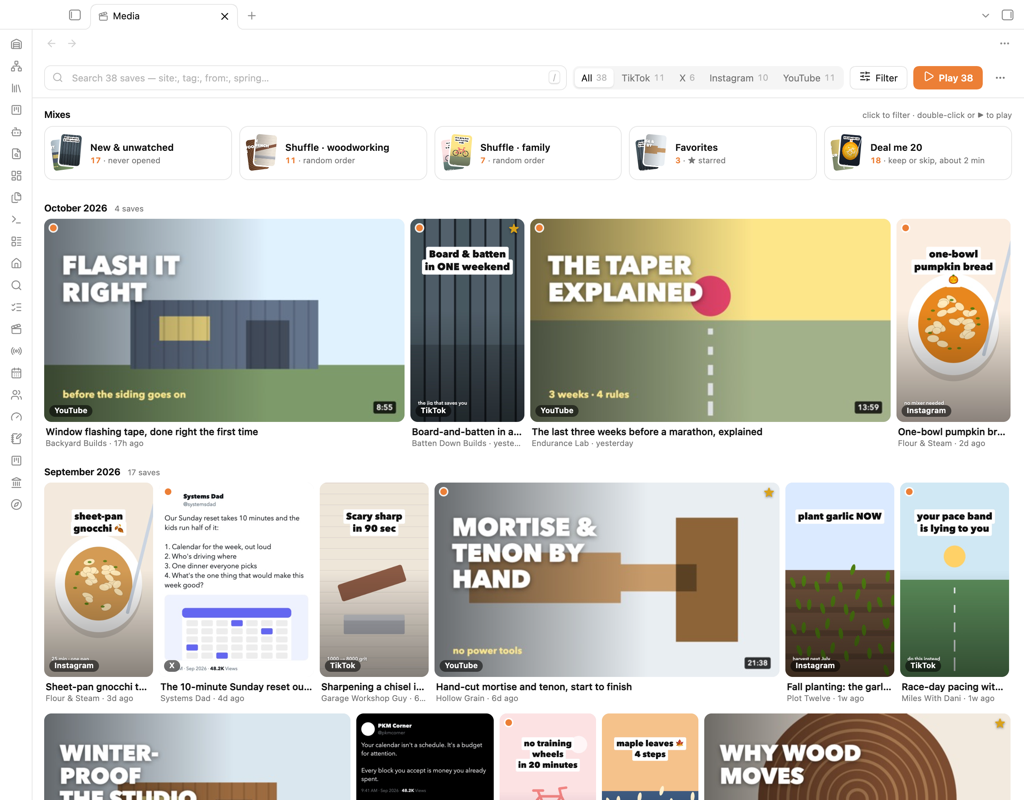 Media Library |
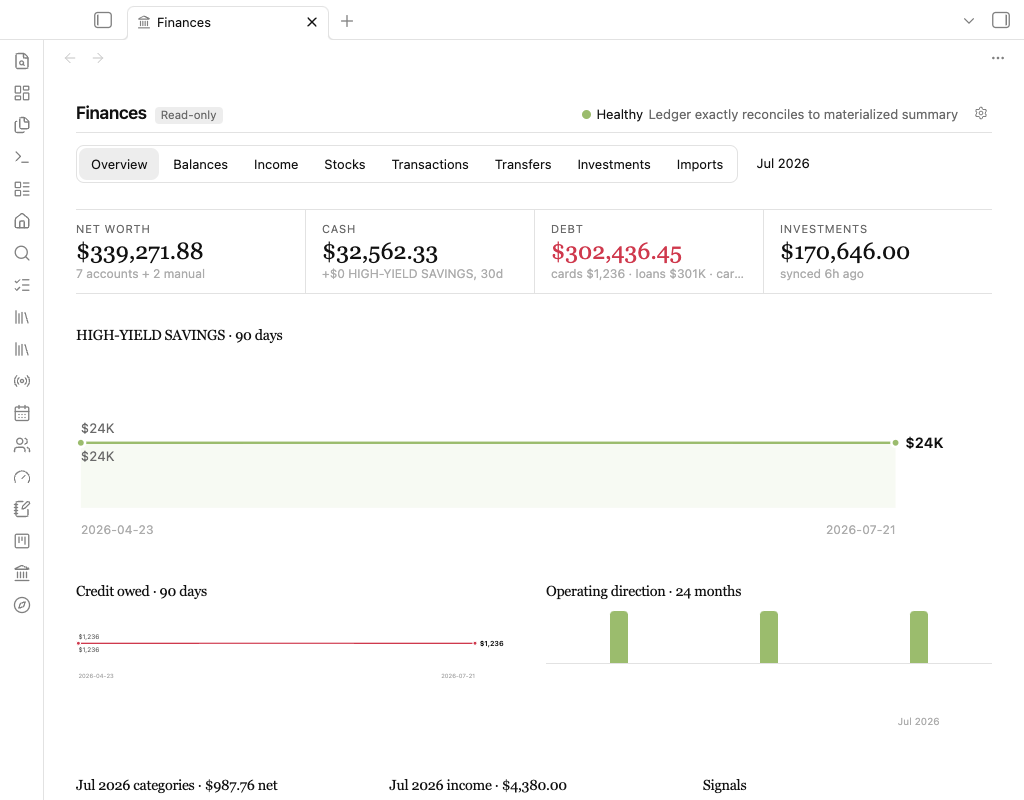 Finances |
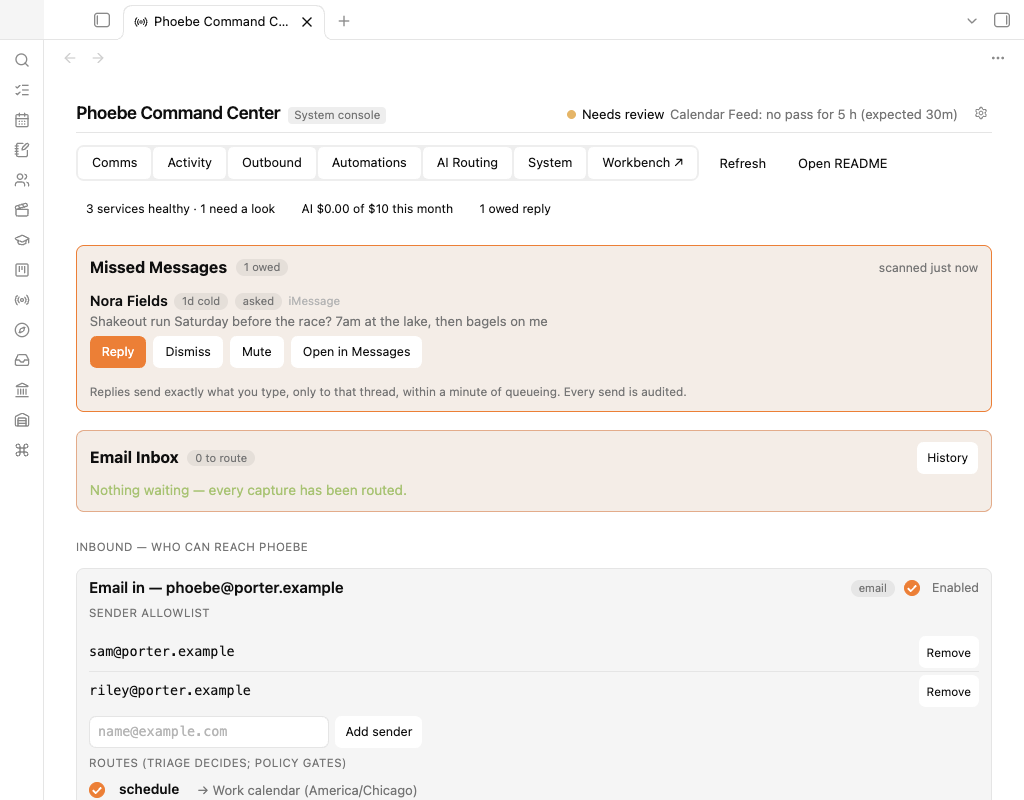 Comms |
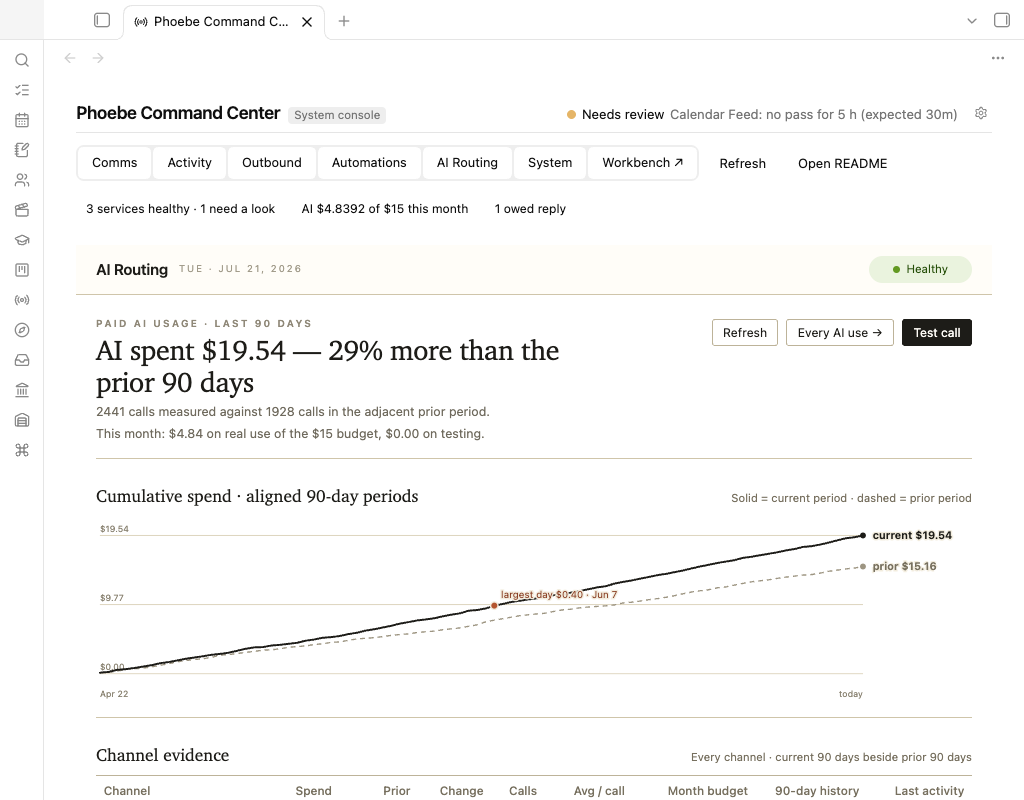 AI Router |
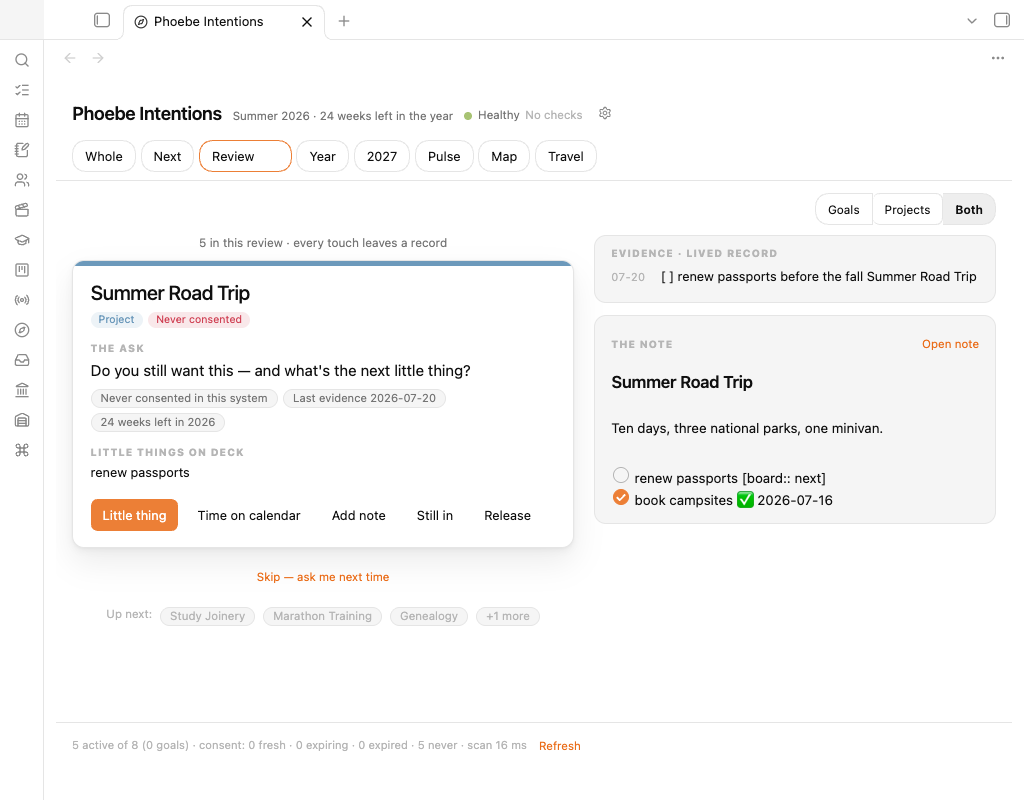 Intentions |
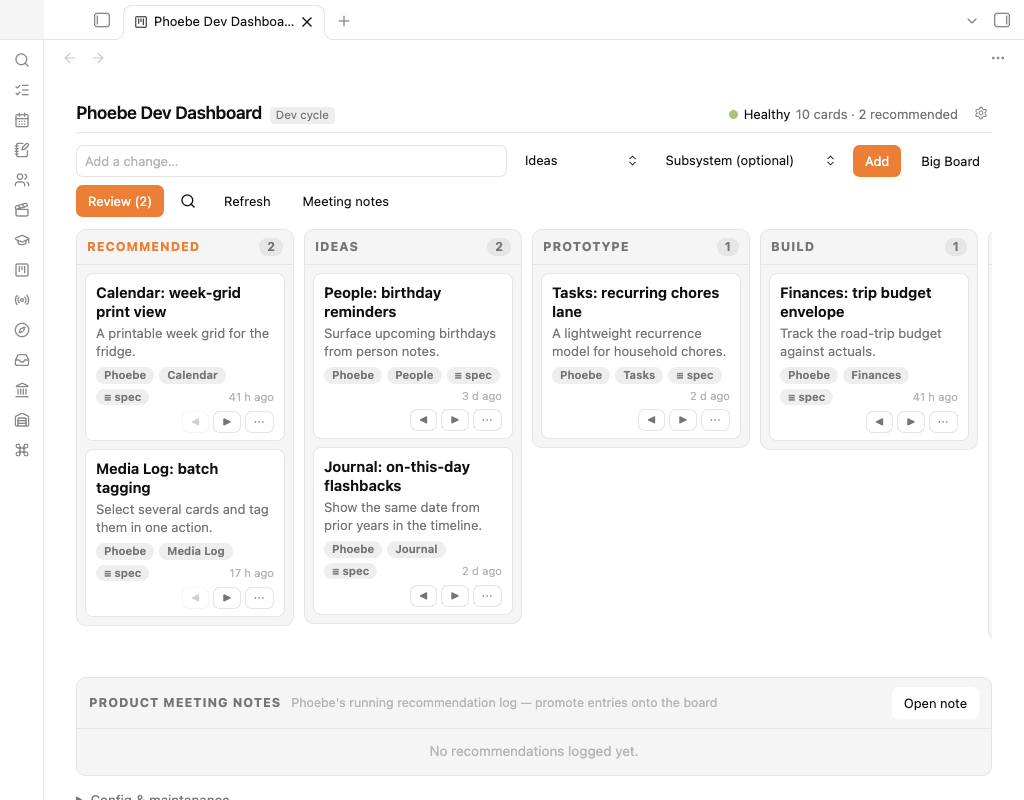 Dev Dashboard |
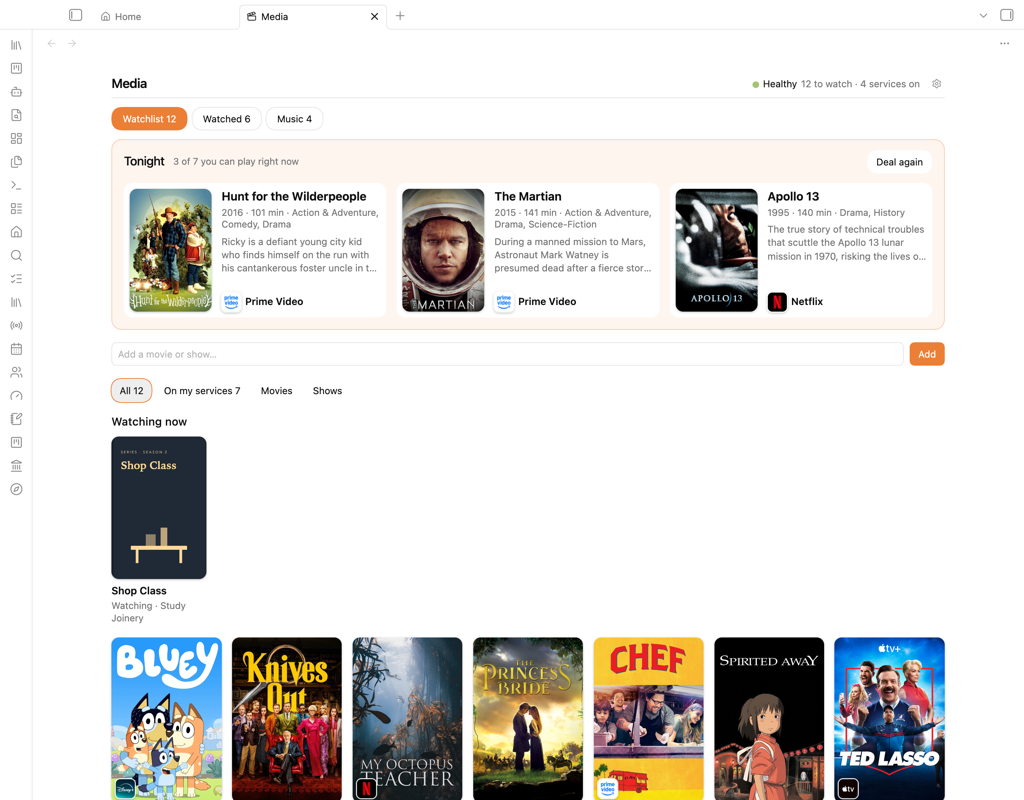 Phoebe Media |
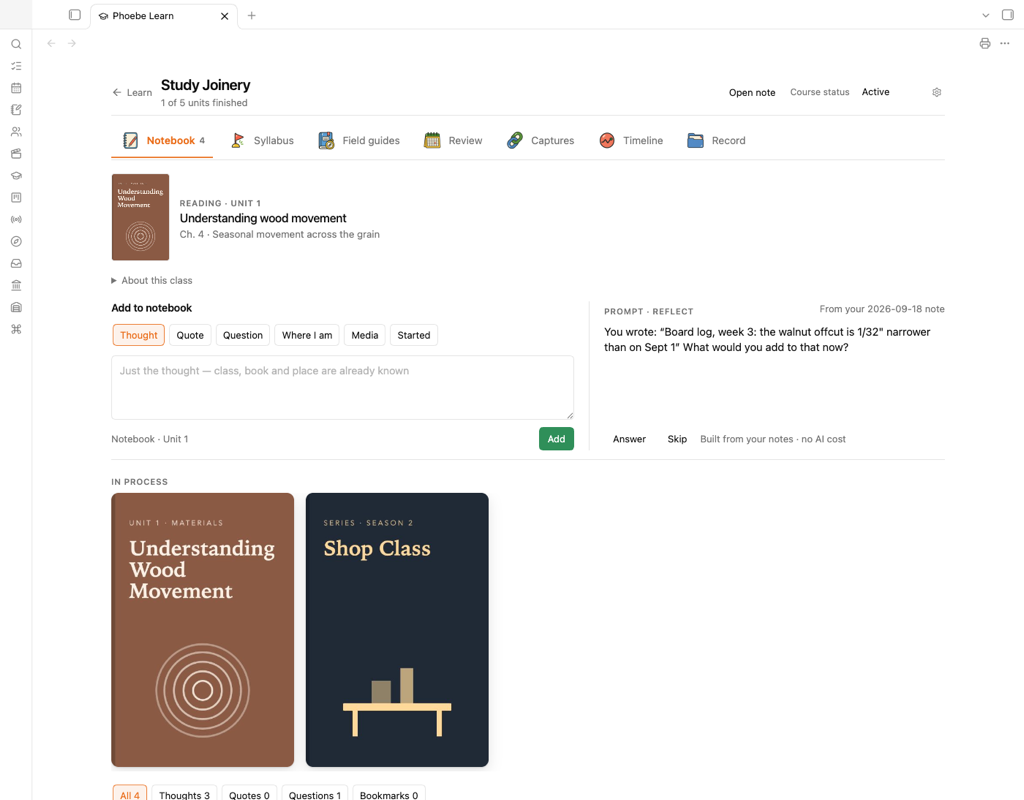 Phoebe Learn |
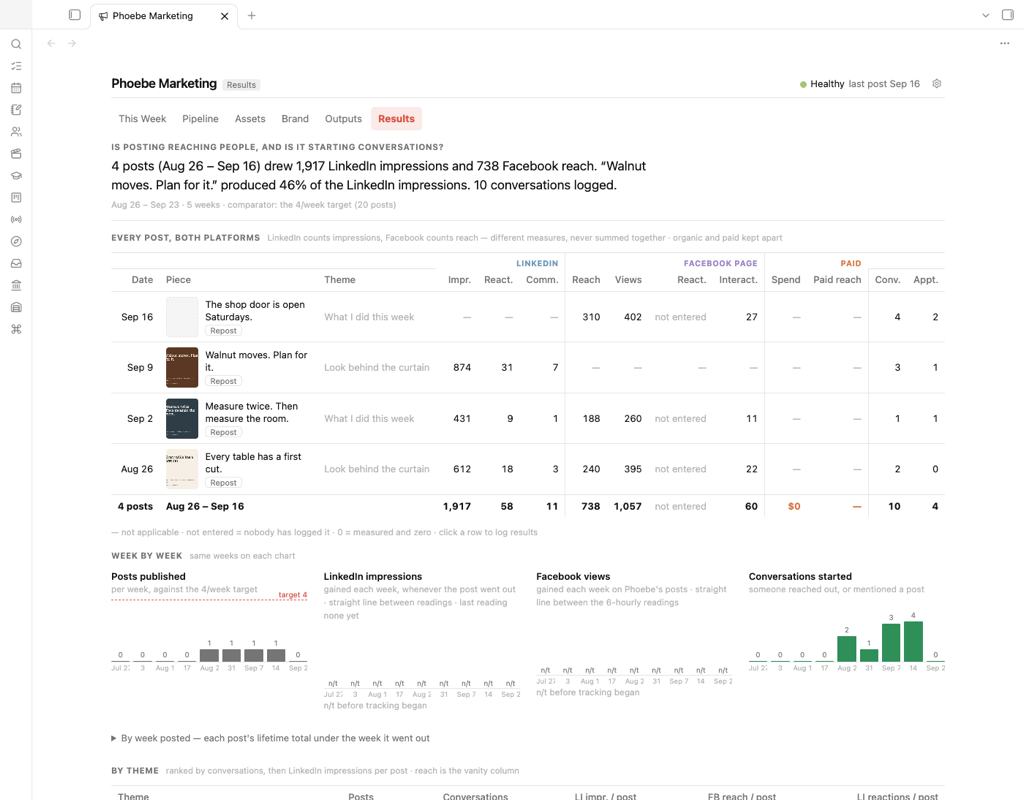 Marketing |
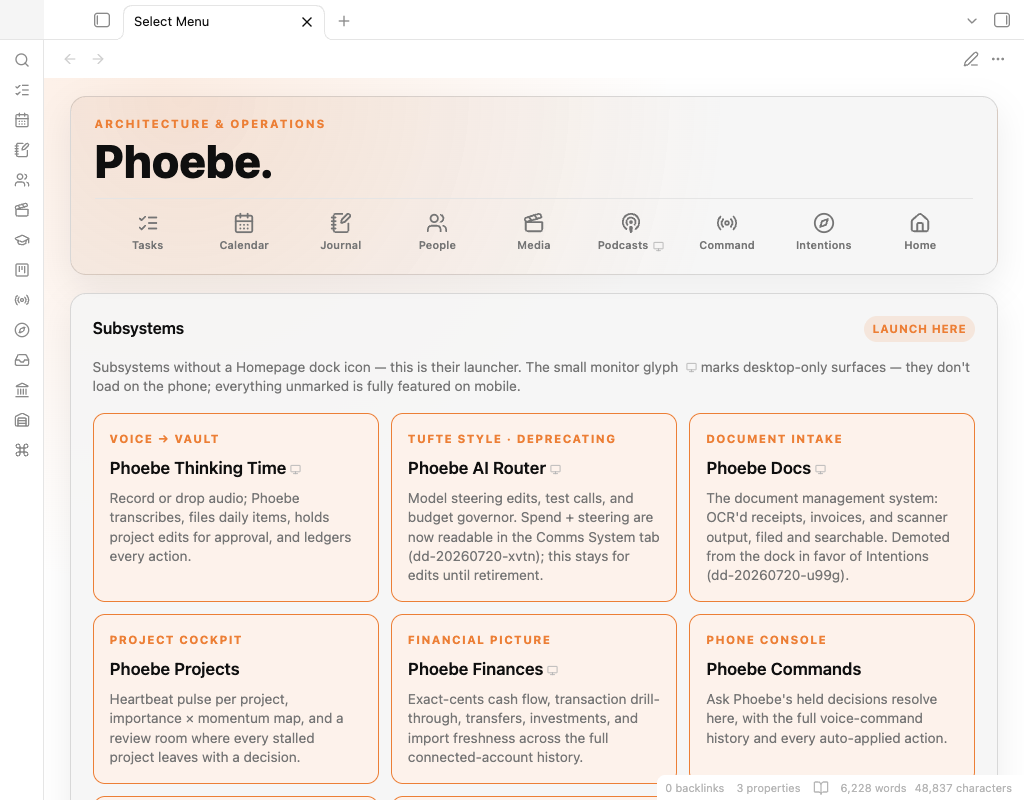 Phoebe Menu |
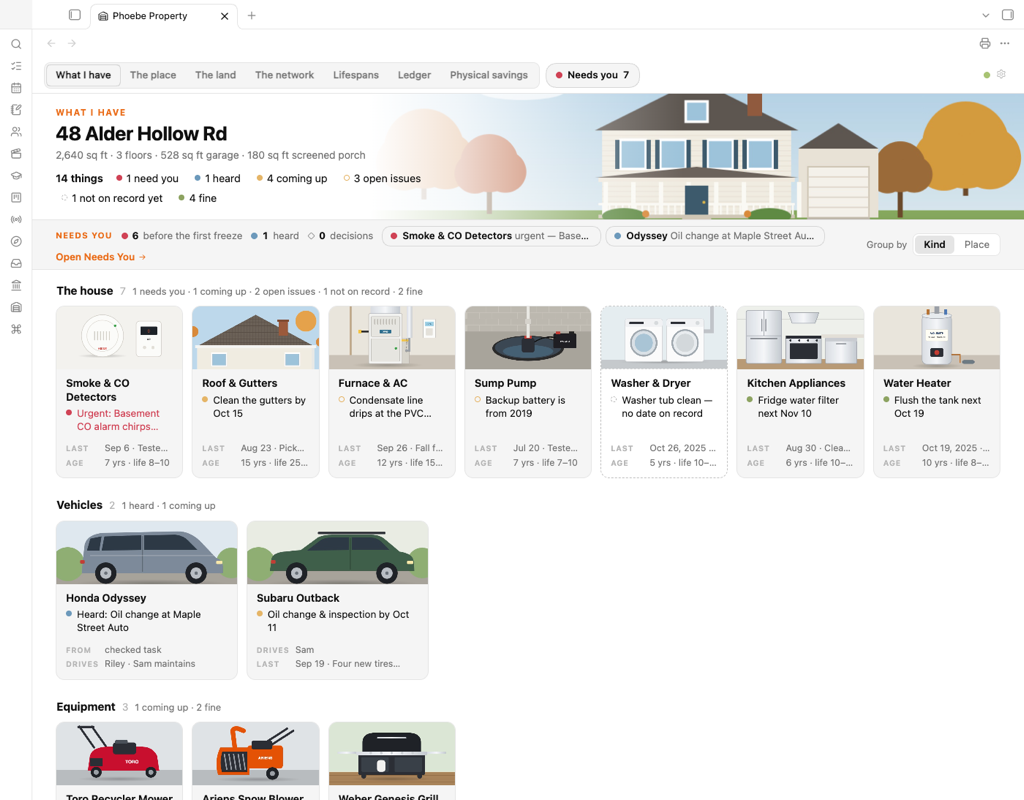 Property |
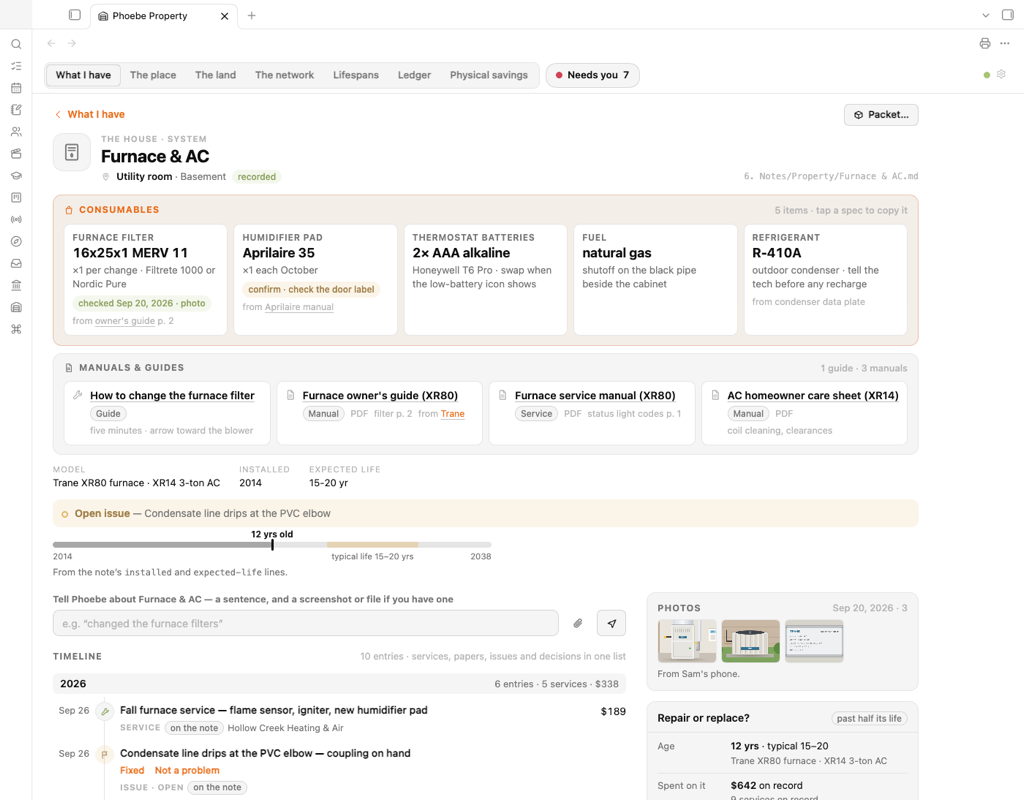 Property dossier |
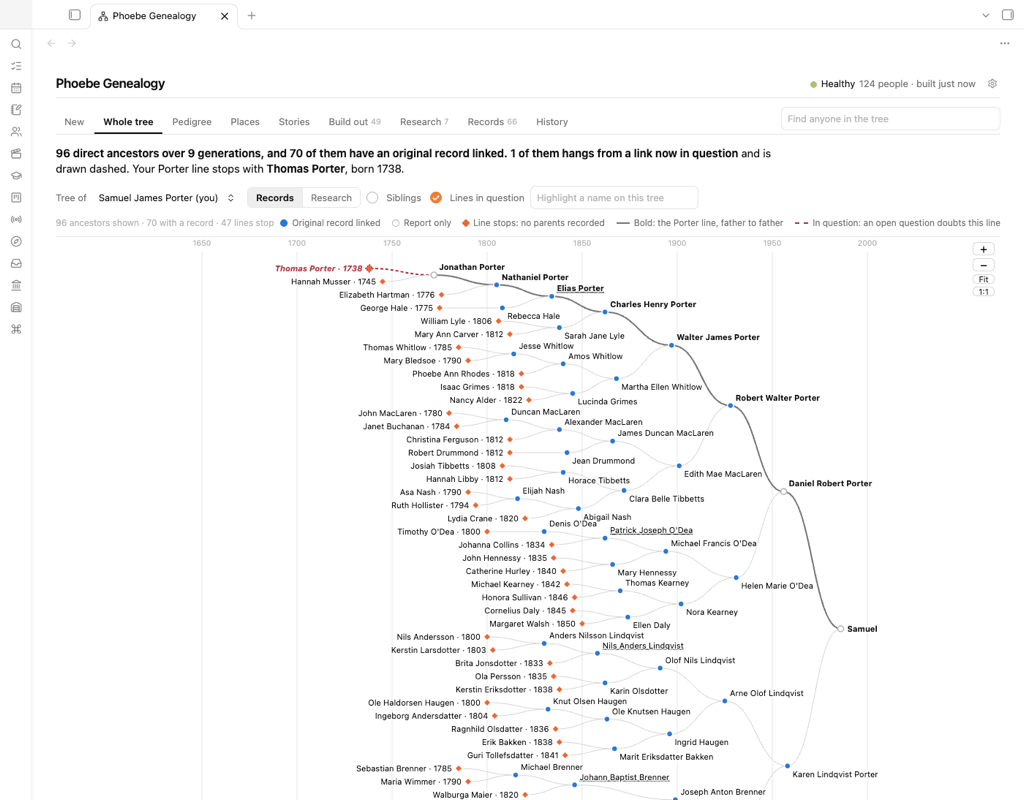 Family history |
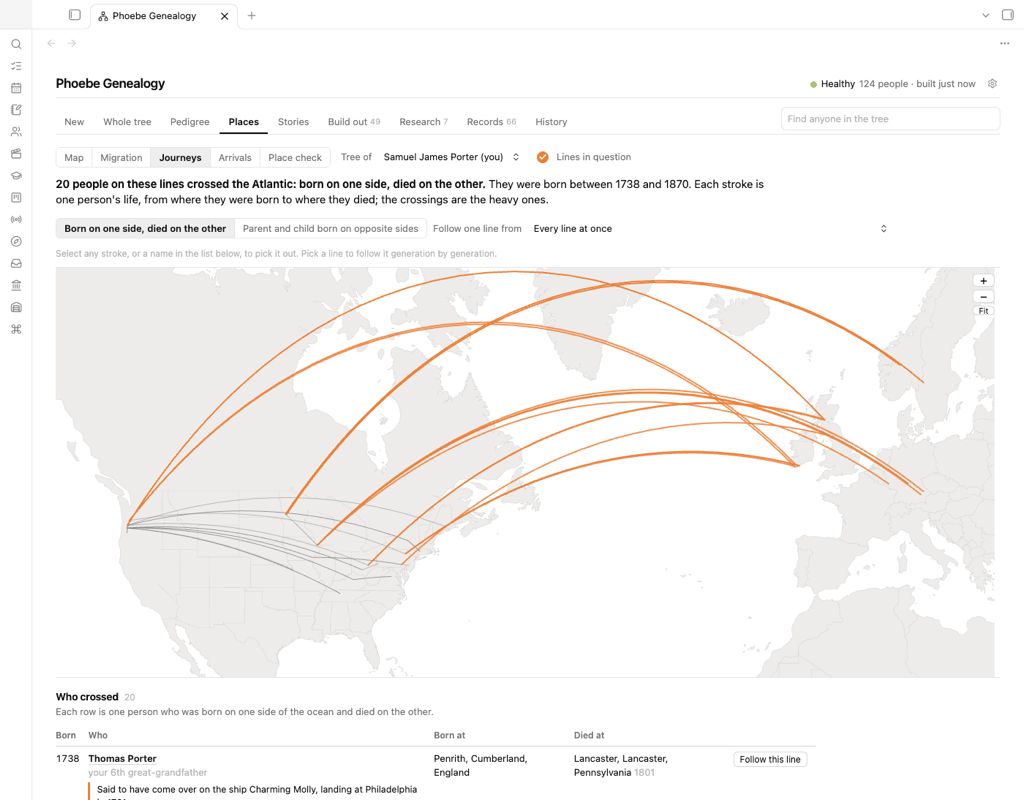 Family journeys |
Every pixel above is real plugins over fictional data: screenshots come from a sanitized demonstration vault (a fictional family, fictional finances, fictional messages), never from the live system. Most were taken before the rename and still say “Select”.
Full tour with screens: SUBSYSTEMS.md
The interesting part
The novelty isn’t any single feature. It’s the working relationship:
- Agents are the engineering team. Nearly every plugin, runner, and pipeline was designed, written, deployed, and verified by AI agents (multiple, interchangeable, across two machines) directed in plain conversation. The human’s role is product owner: pick, reject, redirect.
- The process is itself a subsystem. Recommendations from agents land on a kanban board the moment they’re made. Nothing ships without a written card note and verification evidence. A one-record-per-event rule keeps a single source of truth for every change.
- The vault is the substrate. Everything is plain Markdown files in folders. Every “app” is a view over files the owner could edit by hand. No databases to migrate away from, no lock-in — the system could be abandoned tomorrow and the notes would still be notes.
- The channels are mouths; the brain is shared. Voice, chat, email, and capture all funnel through one routing layer — Phoebe Routing — where a model parses intent but only deterministic doors can write, and a release gate replays 1,581 fixture checks across thirty-four channels in both of its synchronized implementations. The same sentence behaves identically everywhere, by construction.
- Autonomy is structural, not promised. Agents draft, never send. Message bodies are data, never instructions. Outbound channels are allowlisted and double-gated. Every AI call is priced, attributed, and budget-capped.
How the architecture works: HOW-IT-WORKS.md How the partnership works — and how it stays agent-independent: ENGINEERING.md
The history
The system kept its own records as it was built — a changelog of every ship, and a narrative timeline distilled from it. The sanitized public cut is here:
TIMELINE.md — from a named vision (December 2025), through a capture pipeline and months of ecosystem research, to a five-day sprint in July 2026 in which the vault became an operating system — the week it had to prove it could be lived in, the fortnight it went public and hardened itself, the seventeen days when it went transaction-deep, learned to review itself with three different AI engines at once, and got a phone line of its own — and the five weeks after that, when every channel collapsed into one conversation spine, the tests learned to guard the real vault, and the system grew rooms for learning, watching, and outreach — and the ten days after that, when every room was graded by whether it was actually used, and the ones that failed were rebuilt the same day — and, in November, the day she got her name.
It includes the mistakes, kept on purpose.
And the scale is verifiable, not vibes: 1,146 changelog entries, 696 dev-cycle cards (224 of them through the owner’s review room), 25 plugins from ~90,000 lines of agent-written source, 3,229 captured media items, 38 scheduled server jobs — all of it operated on a $15/month AI budget with a hard stop. Full stats in the timeline.
Phoebe is a personal system and is not distributed. Questions and conversation are welcome on GitHub.
The name comes from Romans 16, where Paul calls Phoebe “a helper of many” and trusts her to carry his letter. For the curious, it also stands for Personal Hub Of Everything, Backed by Evidence.
Specifications:
- About 26,000 plain Markdown files in one Obsidian vault.
- Twenty-five small apps, written by AI agents from conversation.
- 1,146 changes logged since December 2025.
- 696 development cards, most written from a phone.
- Runs on a Mac mini in the house. No data on anyone else's servers.
- Reached by text, email, voice or a tap.
- Named for Phoebe of Romans 16, "a helper of many."
- Edition of one household.